
A swimming pool changes the way a backyard functions. It affects circulation, drainage, privacy, planting, paving, fencing, sightlines, maintenance access and how the outdoor space connects to the home.
Good pool landscaping design is not just about making the pool look softer or more luxurious. It is about resolving the practical issues that determine whether the space works over time: where water moves, how plants behave near paving and pool fences, where people sit, how privacy is achieved, and whether the finished garden is manageable after several years of growth.
This guide explains the design decisions that matter when landscaping around a swimming pool in Sydney, including poolside planting, privacy screening, drainage, paving, compliance, outdoor living and common mistakes.
If you are ready to move from research to a tailored design, visit our Pool and Landscape Design Sydney service page.
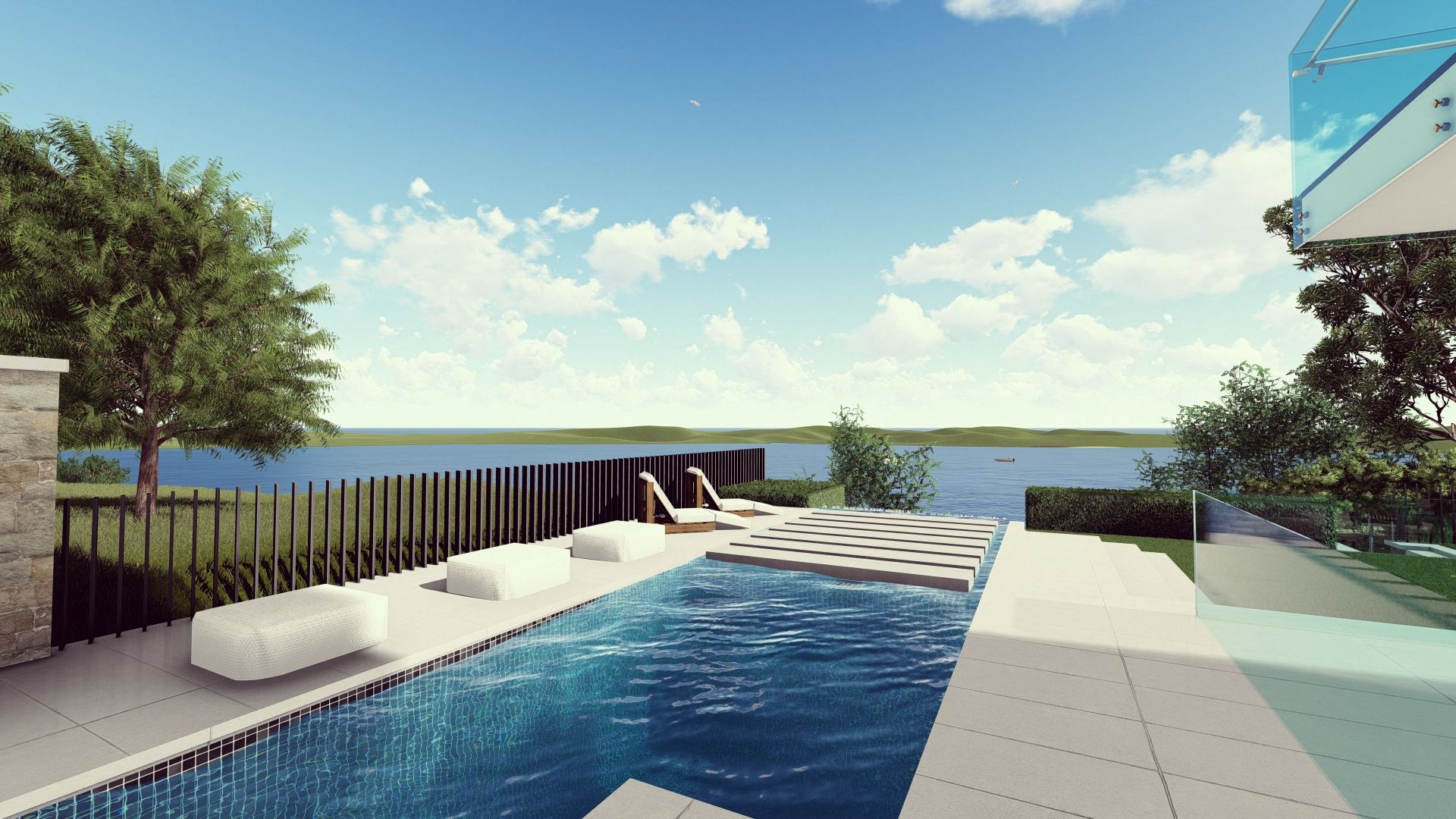
Quick Answer: What Makes a Good Pool Landscape Design in Sydney?
A good pool landscape design in Sydney combines pool-safe planting, privacy, drainage, non-slip surfaces, compliant pool fencing, practical access and outdoor living areas suited to the site.
The design should account for:
- sun, shade and reflected heat
- paving falls and stormwater movement
- plant litter and mature plant size
- pool barrier non-climbable zones
- sightlines from neighbours and the house
- pool equipment access
- soil depth and garden bed width
- how the pool is used when people are swimming and when it is only being viewed
The strongest pool landscapes are planned as part of the whole backyard, not as planting added around the pool after construction.
Pool Landscaping Is a Technical Design Problem
Pool areas are some of the most demanding parts of a residential landscape. They combine water, hard surfaces, safety barriers, planting, services, furniture, shade, privacy and frequent barefoot use.
That creates several design pressures at once.
The paving needs to shed water without creating awkward falls. The planting needs to tolerate heat, glare and restricted soil. Privacy needs to be achieved without creating pool fence compliance issues. The pool equipment needs to be screened but accessible. Seating needs to feel close enough to the pool to be useful, but not forced into leftover space.
When these issues are not resolved early, homeowners often end up with the same problems: garden beds too narrow for the plants selected, paving that stays wet, privacy screens in the wrong place, messy plants beside the water, or a pool that feels disconnected from the alfresco area.
A good pool landscape plan solves these problems before the work begins.
Start With the Site, Not the Plant List
Many homeowners start by asking, "What are the best plants around a pool?"
A better first question is:
What conditions are those plants being asked to tolerate?
Poolside planting is exposed to conditions more stressful than those in a standard garden bed. Paving reflects heat. Glass fencing increases glare. Narrow beds dry quickly. Chlorinated or saltwater splash can affect sensitive plants. Wind may funnel along side boundaries. Retaining walls and fences can create hot, still pockets with poor airflow.
This means the right plant depends on the actual site, not a generic "best pool plants" list.
- A plant that works in a shaded North Shore garden may fail beside a hot Western Sydney pool.
- A plant that suits a coastal Northern Beaches property may not suit a frost-prone Blue Mountains site.
- A plant that looks good in a nursery pot may become too wide, too messy or too high-maintenance once it matures.
Dapple Landscape Design's approach is supported by horticultural knowledge, with Julian Saw's background including experience at the Royal Botanic Gardens and the University of Sydney. That matters around pools because plant performance, mature size and site suitability are just as important as the visual style.
For readers seeking deeper plant and site suitability advice, Dapple also provides Sydney horticulturalist support as part of its broader design expertise.
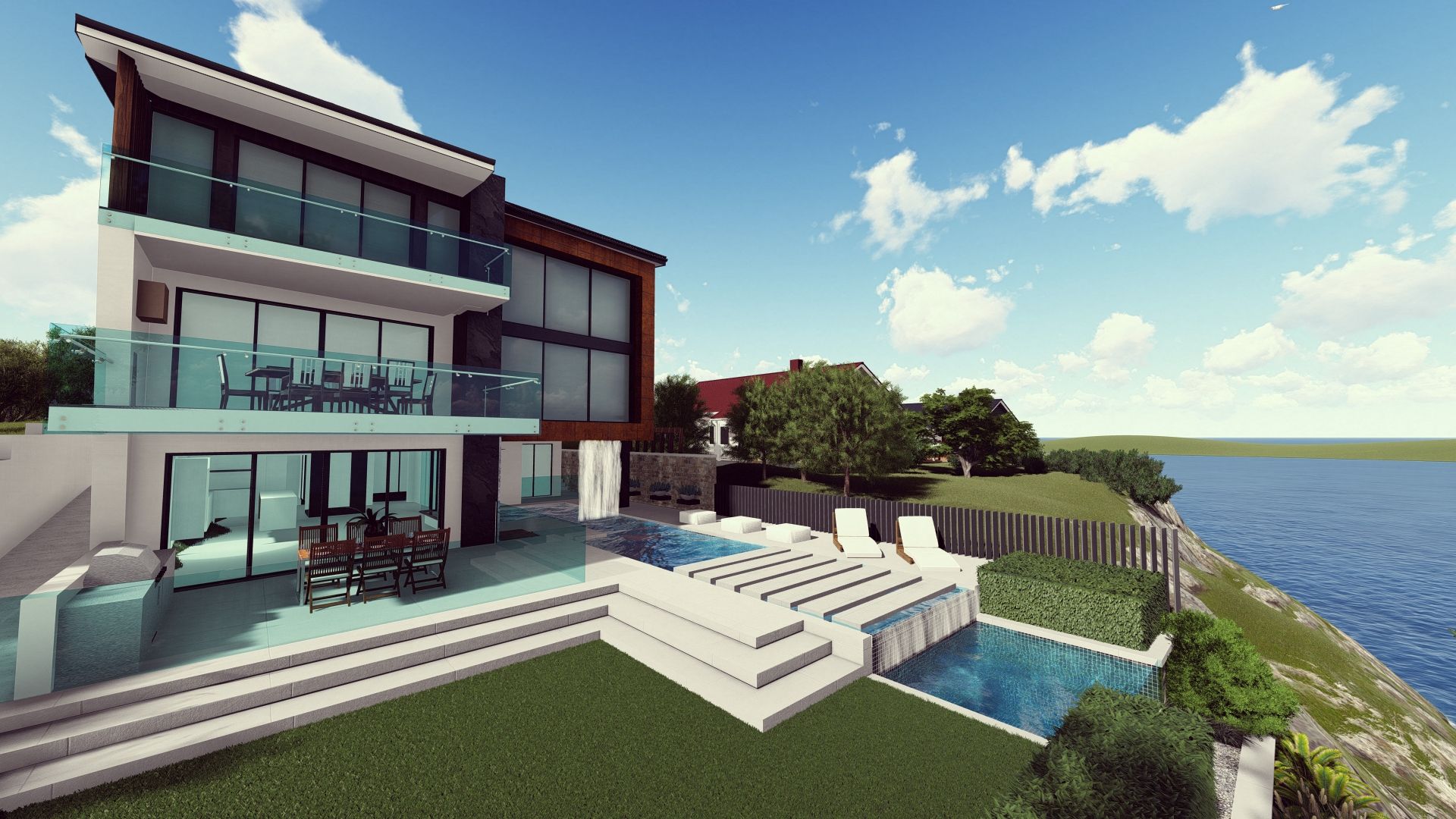
Choosing Plants Around a Pool
Poolside plants need to be selected for their structure, resilience, and maintenance requirements.
Strong poolside planting usually provides form, privacy or seasonal interest without creating excessive maintenance. They need to tolerate the site's sun, wind, soil and reflected heat. They also need to fit the available garden bed once mature.
Useful poolside plants generally have:
- low leaf, flower or fruit drop
- non-invasive root behaviour
- tolerance to heat and reflected light
- a mature size that suits the space
- foliage that is comfortable near bare skin and narrow paths
- enough structure to look good year-round
- manageable pruning requirements
- suitability for the local microclimate
This does not mean the planting needs to be plain. A pool garden can still be lush, architectural, native, coastal, tropical, formal or minimal. The difference is that each plant must earn its place functionally, not just visually.
Around pools, the wrong plant is often not wrong because it looks bad. It is wrong because it drops too much litter, outgrows the bed, blocks access, becomes climbable near a fence, creates too much shade, or needs constant pruning to stay under control.
What Not to Plant Too Close to a Pool
Some plants are better kept away from the pool edge, even if they are useful elsewhere in the garden.
Avoid trees and shrubs that drop large amounts of leaves, flowers, bark, berries, seed pods or fruit into the water. Avoid plants with sharp tips, thorns or irritating foliage beside narrow paths or pool entry points. Avoid species with aggressive roots near paving, walls, pipes or pool structures. Avoid plants that become too wide for the bed and need constant cutting back.
Also, be careful with fast-growing screening plants. They may solve a privacy issue quickly, but they can become a long-term maintenance problem if the bed is too narrow or the hedge is too close to the pool fence.
Wildlife-attracting plants can still be part of the broader garden. They simply need to be placed thoughtfully. A planting zone that attracts birds and bees may be better positioned away from the immediate pool edge, where leaf litter, flowers and activity are less likely to affect the water and paving.
The aim is not to remove character from the garden. It is to place the right plants in the right zones.
Pool Privacy Without Creating a Compliance Problem
Privacy is one of the biggest drivers of pool landscaping in Sydney, especially on compact blocks, sloping sites and properties overlooked by neighbouring windows or balconies.
The mistake is assuming privacy always means planting directly against the pool fence.
In NSW, trees, shrubs, pot plants, furniture, BBQs, toys, ladders and other climbable objects must not be within the 90cm non-climbable zone around a pool barrier. This makes pool privacy a design and compliance issue, not just a planting issue.
The first step is to identify the actual sightline problem.
- Is the pool overlooked from a second-storey window?
- Is the issue a side boundary?
- Is the pool visible from the street?
- Is privacy needed while swimming, sitting, dining, or walking from the house to the pool?
Once the sightline is understood, the solution can be more targeted. A small tree placed away from the fence may better screen an upper window than a hedge beside the fence. A batten screen, masonry wall, pergola, offset planter, or layered planting bed may resolve the issue without compromising compliance.
Good privacy design should make the pool feel protected without making the backyard feel boxed in or overplanted.
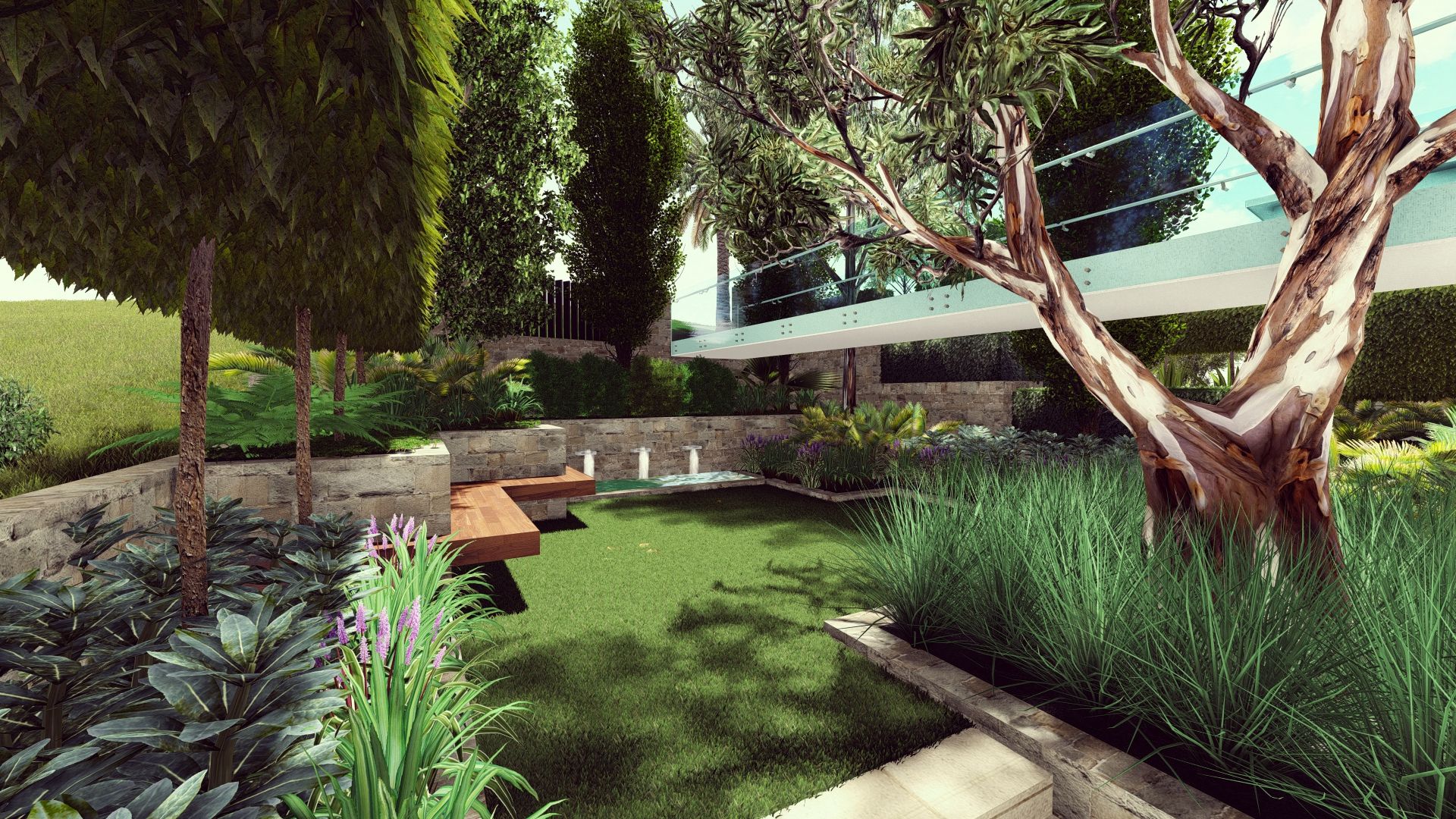
Drainage Around Pool Paving and Garden Beds
Drainage is one of the most common weak points in pool landscaping.
Pool areas collect water from rain, splash, wet swimmers, cleaning, irrigation and runoff from nearby paving or higher parts of the block. If levels are poorly resolved, water can sit on paving, run into garden beds, create slippery areas, stain surfaces, damage lawns or collect near gates and steps.
A pool landscape plan should consider:
- where paving should fall
- whether strip drains or grated drains are needed
- how water moves away from the house
- how lawn transitions into paving
- whether garden beds will receive too much runoff
- how retaining walls affect water movement
- whether steps, gates or furniture zones will stay wet after rain
- how the pool area performs during heavy storms
Sydney conditions make this even more important. Western Sydney sites often have heavier clay soils. Blue Mountains properties may involve slopes, rock shelves and retaining walls. Inner West and North Shore homes may have tight access and older drainage patterns. Northern Beaches and Eastern Suburbs sites may involve sandy soils, salt exposure and steep blocks.
Drainage should be designed with the whole backyard in mind, not just the pool edge. For deeper planning, see Dapple’s guide to Residential Landscape Drainage Sydney.
Paving, Coping and Heat Around the Pool
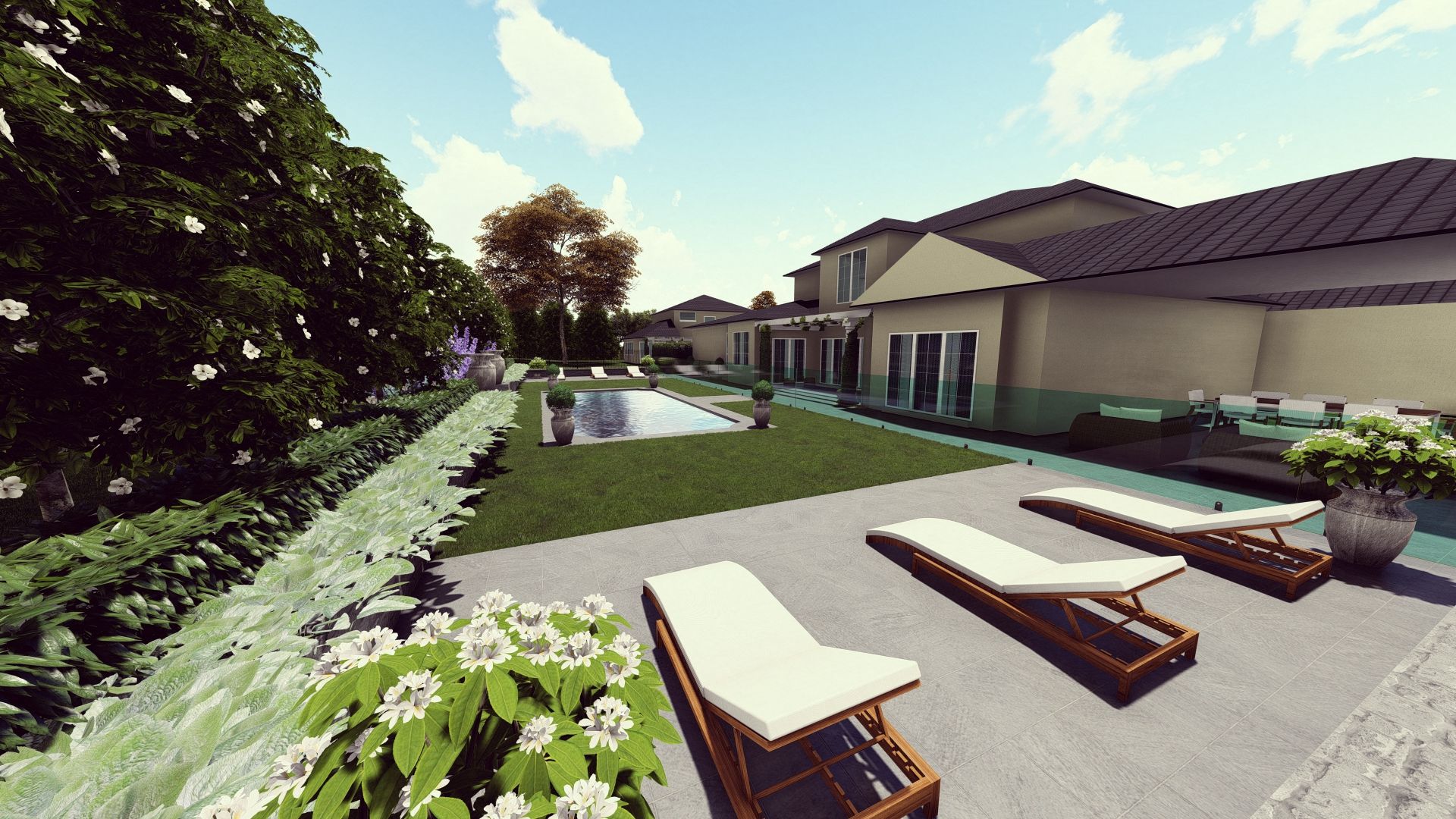 Pool paving affects comfort, safety and the visual character of the whole backyard.
The surface needs to be suitable for wet feet, durable outdoors, comfortable in heat, and compatible with the pool coping, fence, steps, lawn, garden beds and furniture zones.
Heat is a major consideration in Sydney. Dark paving can become uncomfortable in full sun. Very pale paving may reduce heat but create glare. Some smooth finishes look refined when dry but become slippery when wet. Large paved areas can also increase reflected heat and make the pool feel hard unless balanced with planting and shade.
The best results usually come from designing paving and planting together. Garden beds, canopy, lawn, permeable surfaces and shade can soften the hardscape and reduce the "hot courtyard" effect that often occurs around pools.
The goal is not simply to surround the pool with an expensive surface. The goal is to create a comfortable transition between water, garden and outdoor living.
Designing the Pool as an Outdoor Living Space
A pool should be planned as part of the way the household uses the backyard.
That means looking beyond the swimming area itself.
- Where will adults sit while children swim?
- Where will towels go?
- Is there shade in the afternoon?
- Can people move comfortably from the house to the pool?
- Is the outdoor dining area connected to or separate from the indoor dining area?
- Can the pool be seen from the kitchen or living room?
- Where will lighting make the space useful at night?
- How will the pool look when nobody is swimming?
That final question is important. In most homes, the pool is viewed more often than it is used. It is seen through windows, on decks, in kitchens, in bedrooms, and in alfresco areas every day. The planting, paving and backdrop need to work as a garden composition, not only as a swimming zone.
This is where pool landscaping goes beyond "pool surrounds." It becomes an outdoor living design.
For broader backyard planning, see our Residential Landscaping Sydney service.
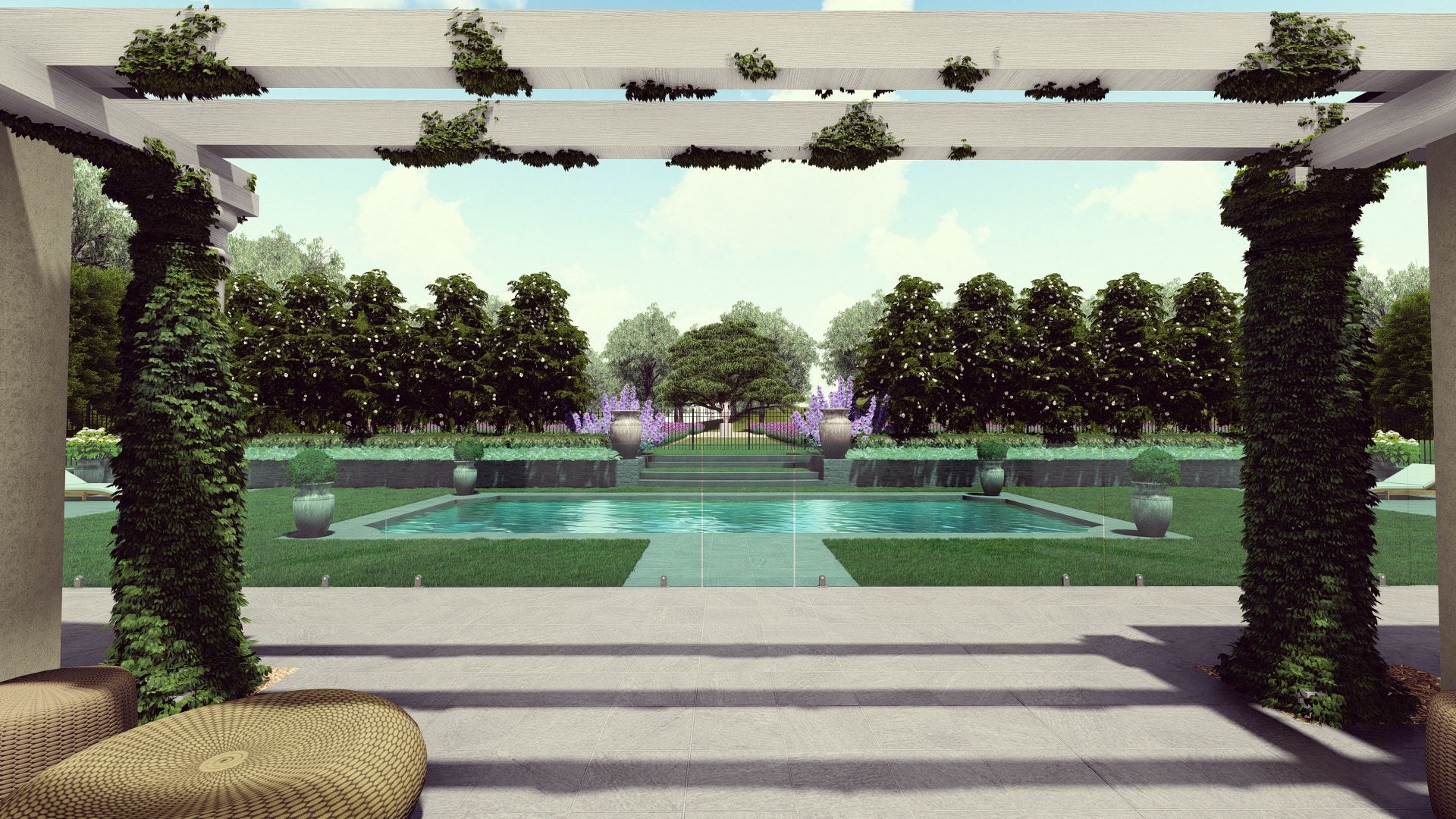
Small Backyard Pool Landscaping
Small Sydney backyards need restraint and precision.
In compact spaces, every element has a larger impact. A hedge that grows too wide can make the area feel cramped. A tree in the wrong position can dominate the pool. Too many materials can make the space visually busy. A fence in the wrong place can make the pool feel boxed in.
The strongest small pool landscapes usually make each element do more than one job.
A raised planter can provide privacy, soften a wall and create a backdrop. A built-in bench can add seating without loose furniture. Upright planting can provide greenery without taking up too much space. A single small tree can frame the pool and provide seasonal interest without overwhelming the yard.
Small pool design often improves when the material and plant palette are simplified. Fewer, better choices usually create a calmer, higher-end result.
Sloping Blocks and Pool Landscaping
Sloping sites add complexity to pool landscaping because the pool affects levels, retaining walls, stairs, drainage, privacy, access and construction sequencing.
A pool may sit above or below the main alfresco area. It may need terraces, steps, retaining walls, balustrades or changes in planting depth. If these elements are not resolved together, the pool can feel disconnected from the house or difficult to access.
This is especially relevant in the Blue Mountains, North Shore, Northern Beaches, Hills District and other parts of Sydney with uneven blocks.
Accurate level information is critical. Finished floor levels, existing contours, retaining wall heights, pool coping levels and drainage points should be understood as early as possible. Without this information, stairs, paving transitions, garden beds and retaining walls may need to be adjusted during construction.
For sloping blocks, the designer, builder, pool contractor and landscaper need a clear understanding of levels before work begins. A good pool landscape plan should reduce site surprises, not leave them to be solved during installation.
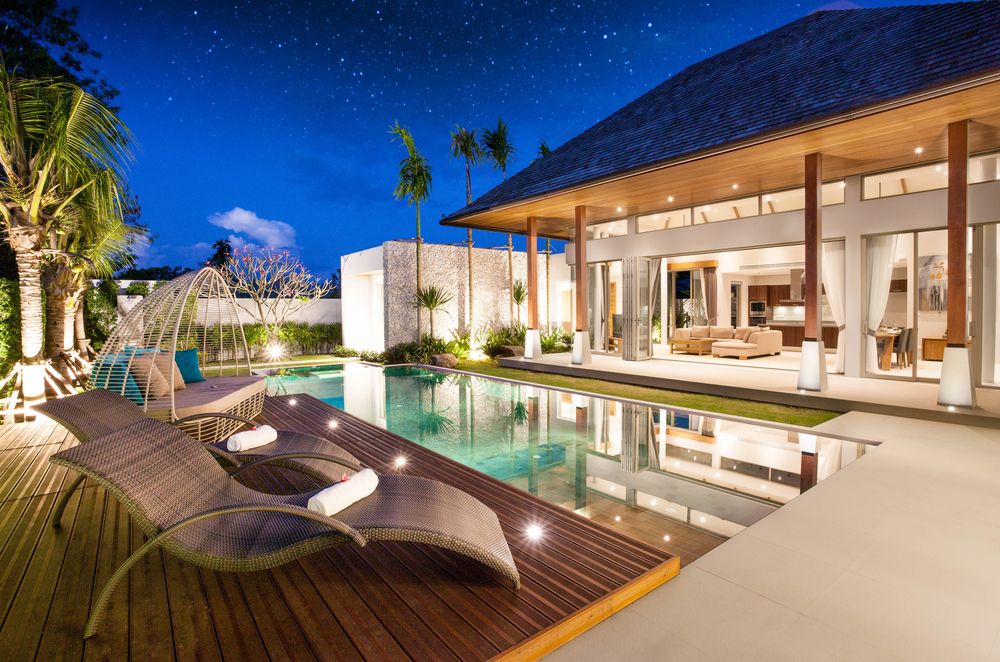
Sydney Microclimates Around Pools
There is no single pool planting formula for Sydney.
Different parts of the city create different design pressures.
Northern Beaches and Eastern Suburbs pools may need planting that tolerates salt-laden wind, sandy soils and coastal exposure.
Western Sydney pools often need greater heat tolerance, soil improvement, shade planning, and plants that can cope with the hot afternoon sun.
North Shore gardens may involve established canopies, filtered light, older drainage conditions and a stronger need to work around existing trees.
Hills District properties often have larger family backyards but may also require careful level changes, privacy screening, and durable plantings around high-use outdoor areas.
Blue Mountains properties may need to consider slope, cooler conditions, bushfire-sensitive planting decisions, and local weather variation.
Inner West pools often require compact planting, strong privacy design and careful use of every metre of space.
This is why local experience matters. A pool landscape that performs in one part of Sydney may not perform in another without adjustment.
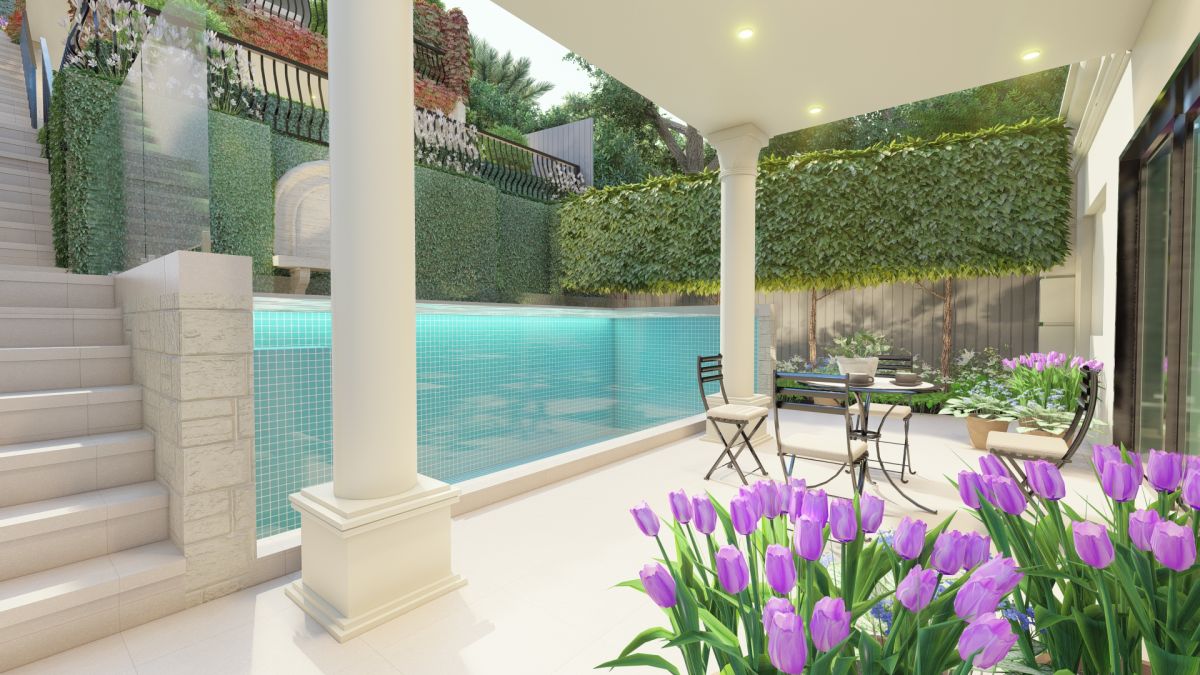
Why Experience Matters in Pool Landscaping Design
Many of the most important pool landscaping decisions are hidden in the planning stage.
An experienced designer is not only thinking about how the pool area will look when first installed. They are thinking about how it will perform after several summers, during heavy rain, once plants reach mature size, and once the family uses the space every week.
That experience matters because pool environments punish poor assumptions.
A tree planted too close to the water can create an ongoing buildup of leaf litter. A hedge planted for quick privacy can become a compliance or maintenance issue. A garden bed that is too narrow can make even good plants perform badly. Paving without correct falls can stay wet where people walk barefoot. Pool equipment that is hidden too aggressively can become difficult to service.
Dapple Landscape Design brings together design experience, horticultural knowledge and documentation skill. Led by Julian Saw, Dapple has been designing outdoor spaces across Sydney, the Blue Mountains and surrounding regions since 2013. Julian's background includes experience at the Royal Botanic Gardens and the University of Sydney, giving the design process a stronger foundation in plant performance and site suitability than a purely visual approach.
For pool landscaping, that means looking at the whole system: planting, privacy, drainage, levels, materials, fencing, access and outdoor living.
Pool Equipment, Services and Access
Pool equipment is rarely the visual focus, but poor equipment planning can weaken the whole design.
Pumps, filters, heaters, chlorinators and service zones need to be accessible for maintenance. They should not be buried behind dense planting or boxed in so tightly that servicing becomes difficult. At the same time, they should not dominate the view from the alfresco area or the living room.
A good design screens equipment without making it impractical.
The same applies to pool gates, service paths, cleaning tools, outdoor showers, pool covers and storage. These details are often ignored in early design conversations, but they strongly affect how easy the space is to live with.
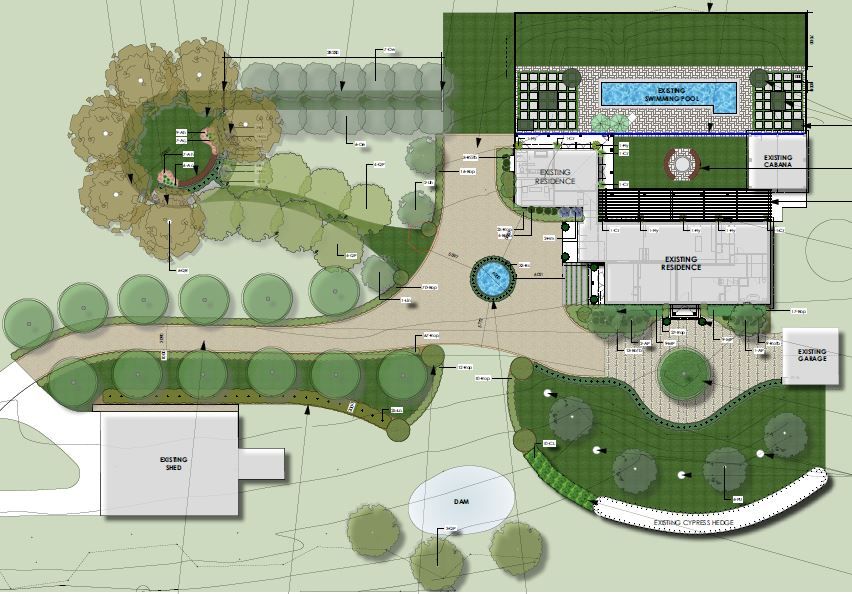
Common Pool Landscaping Mistakes in Sydney Homes
Most pool landscaping mistakes show up after the first summer, the first storm or the first few years of plant growth.
The most common issues include:
- choosing plants for instant screening without considering mature size
- placing messy plants too close to the pool water
- using narrow beds that cannot support the plants selected
- ignoring reflected heat from paving, glass and walls
- placing planting too close to pool barriers
- failing to plan drainage before paving is installed
- hiding pool equipment in a way that blocks maintenance access
- designing the pool as a separate feature instead of part of the backyard
- using too many materials in a small space
- forgetting how the pool looks from inside the house
These are not style problems. They are planning problems.
Why Dapple's Design Approach Suits Pool Landscaping
Dapple Landscape Design is a Sydney-based landscape design studio specialising in beautiful, functional and sustainable outdoor spaces. The team prepares DA landscape plans, planting plans, hardscape plans, 3D modelling, construction details and landscape specifications for residential, commercial and strata projects.
That combination matters around pools because the pool area needs both creative design and technical planning. The design has to consider how the space will perform in real conditions: heat, glare, wet surfaces, drainage, soil depth, plant maturity, privacy, fencing, maintenance access and everyday movement.
Dapple’s horticultural knowledge supports better plant selection around pools, where planting zones are often hotter, narrower and more exposed than standard garden beds. Plants may need to tolerate reflected heat, limited soil volume, pool splash, wind exposure and regular pruning while still looking good throughout the year.
The studio is led by Julian Saw, a qualified landscape designer with over a decade of experience, including work at the Royal Botanic Gardens and the University of Sydney. This background gives the design process a stronger plant-performance and site-suitability foundation than a purely visual approach.
Dapple is a member of the Landscape Design Institute and has experience preparing landscape plans for projects across Sydney, the Blue Mountains and surrounding regions. The studio has also achieved a 95% DA approval rate on first submission, reflecting its focus on clear, council-ready landscape documentation.
Client feedback regularly highlights Dapple’s responsive communication, professional service, climate-suitable plant selection, clear plans, detailed planting lists and ability to respond to the client’s brief.
For pool landscaping, that mix of design skill, plant knowledge, documentation and local experience helps avoid common mistakes: plants that outgrow the space, privacy screens that interfere with fencing, paving that holds water, garden beds that are too narrow, and pool areas that look attractive but do not function well in daily use.
For related planning services, see Dapple’s Landscape Plan Packages Sydney, Garden Design Sydney, and Sustainable Landscaping Sydney pages.
Pool Landscaping Checklist Before You Start
Before finalising a pool landscape design, check:
- Is the pool fence location already fixed?
- Is the 90cm non-climbable zone clear?
- Where does water drain during heavy rain?
- Will paving be safe and comfortable under bare feet?
- Are garden beds wide enough for the chosen plants?
- Will plants drop leaves, flowers or fruit into the water?
- Can pool equipment be screened and serviced?
- Where is privacy needed most?
- How will the pool look from inside the house?
- Is there enough space for seating, towels and movement?
- Are the plants suitable for the local microclimate?
- Will the landscape still look good when the pool is not in use?
This is the difference between a pool area that only photographs well and one that performs in daily use.
Dapple Landscape Design Experience
Dapple Landscape Design is based in Springwood, NSW, and serves Sydney, the Blue Mountains, and surrounding regions. Our Studio, led by Julian Saw, has been designing outdoor spaces since 2013.
Dapple's work includes DA landscape plans, pool landscaping, planting plans, hardscape plans, 3D modelling, construction documentation and custom garden designs for residential, commercial and strata properties.
Business details:
Dapple Landscape Design Pty Ltd
Ellison Road, Springwood NSW 2777
Phone: (02) 4751 1361
ABN: 29 619 726 948
Instagram: @dapple_landscape_design
FAQs About Pool Landscaping Design in Sydney
What are the best plants around a pool in Sydney?
The best plants around a pool are usually low-litter, heat-tolerant, structurally attractive and suited to the site’s sun, shade, soil, wind and available space. The right choice depends on whether the pool is coastal, inland, shaded, exposed, sloping, compact or surrounded by hot paving.
What plants should not be planted near a pool?
Avoid plants with heavy leaf drop, messy flowers, fruit, brittle branches, invasive roots, sharp foliage or fast-growing habits that require constant pruning. Also, avoid placing dense or climbable plants too close to pool barriers.
Can I plant trees near a swimming pool?
Yes, but tree placement needs care. The right tree can provide shade, privacy and structure. The wrong tree can create leaf litter, root pressure, excessive shade or pool fence issues. Mature height, canopy spread, root behaviour and distance from the pool should all be considered.
How do I create privacy around a pool?
Pool privacy can be created with layered planting, small trees, hedges, feature walls, batten screens, pergolas or raised planters. The best solution depends on where overlooking occurs. Privacy planting must also be planned so it does not interfere with pool barrier requirements.
Is drainage important around a pool?
Yes. Drainage is critical around a pool because rainwater, pool splash, irrigation and runoff need to move safely away from paving, the house, garden beds and outdoor living areas. Poor drainage can cause slippery paving, wet lawns, stained surfaces and long-term maintenance problems.
Should pool landscaping be planned before the pool is built?
Ideally, yes. Planning the pool and landscape together makes it easier to coordinate paving levels, drainage, fencing, planting, retaining walls, privacy, outdoor living areas and access. Existing pool areas can still be improved, but early planning usually gives better options.
Can plants affect pool fence compliance?
Yes. In NSW, trees, shrubs, pot plants and other climbable objects must not be within the 90cm non-climbable zone around the pool barrier. This is why planting near pool fences needs to be designed carefully.
What is the biggest pool landscaping mistake?
The biggest mistake is treating the landscape as leftover space after the pool has been installed. This often leads to narrow garden beds, poor drainage, unsuitable plants, exposed views, awkward paving and a pool area that feels disconnected from the rest of the backyard.
Speak With Dapple About Your Pool Landscape Design
If you are planning a new pool, renovating an existing pool area, or trying to make your backyard more private, practical and beautiful, Dapple Landscape Design can help you think through the details before costly decisions are locked in.
We consider the full pool environment: planting, privacy, drainage, paving, outdoor living, fencing, levels, views, maintenance and long-term plant performance.
For a tailored design, contact Julian today on 1300 DAPPLE (1300 327 753) or message below.