By Dapple Landscape Design | Updated August 2026
The best screening plant is not simply the fastest-growing plant. It is the plant that reaches the required privacy height without becoming too wide, too dark, difficult to maintain or unsuitable for the conditions around it.
In Sydney gardens, screening may be required to block an upper-storey window, soften a boundary fence, hide pool equipment, protect an entertaining area or reduce exposure to a neighbouring balcony.
Each of those problems requires a different planting response.
Quick answer
For Sydney gardens, useful privacy screening plants include Lilly Pilly, Murraya, Viburnum, Photinia and Pittosporum. The best choice depends on mature height and width, sunlight, exposure, soil volume and how much pruning you are prepared to do.
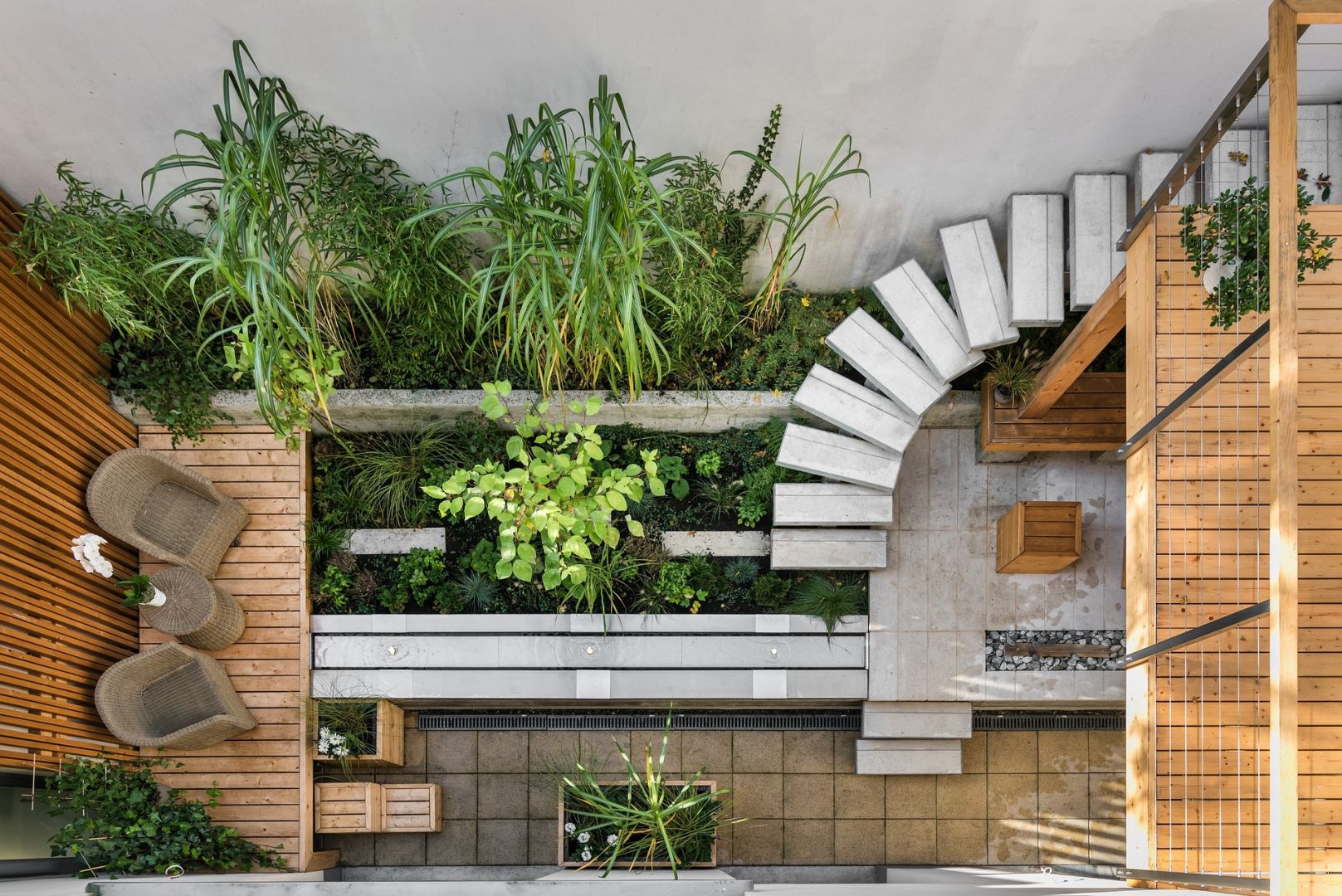
The strongest privacy strategies often combine planting with targeted screening rather than enclosing every boundary.
Privacy is a sightline problem before it is a plant-height problem.
Identify exactly who or what needs to be screened, and from which viewing position, before deciding how tall or dense the planting needs to become.
Screening Plant or Hedge: What's the Difference?
The terms are often used interchangeably, but they describe different design outcomes.
Filtered privacy
Screen
A planted screen interrupts or filters an unwanted view. It can contain trunks, openings and varying foliage density.
Best for: overlooking, softening boundaries and retaining more light or airflow.
Continuous privacy
Hedge
A hedge is deliberately maintained as a relatively continuous wall of foliage, usually through regular clipping.
Best for: strong boundary definition, formal gardens and more complete visual separation.
A hedge normally involves greater long-term pruning commitment. A screen can often allow plants to retain more of their natural form.
The Screening Equation: Five Things to Define First
Professional plant selection starts with the privacy problem—not the nursery catalogue.
Height
Where does the sightline actually need to be interrupted?
Width
How much planting-bed width can the garden realistically sacrifice?
Light
Will the screen shade windows, lawn or neighbouring garden areas?
Exposure: western heat, salt wind, frost, reflected heat and irrigation conditions.
Maintenance tolerance: how frequently are you prepared to prune and shape the screen?
Required height + available width + light + exposure + maintenance tolerance = the right screening plant.
Best Screening Plants for Sydney Gardens
The following plants are represented in Dapple's Plant Finder and suit different privacy applications when their mature dimensions and site requirements are properly considered.
Best compact native option
Lilly Pilly 'Bush Christmas'
Syzygium australe 'Bush Christmas'
Mature size
Approx. 2m × 1.5m
Light
Sun to part shade
Type
Australian native
A particularly useful option where a compact native hedge or screen is required. Its smaller natural dimensions make it easier to integrate into suburban gardens than screening species capable of reaching 4–5 metres wide.
Best fragrant formal hedge
Murraya / Orange Jessamine
Murraya paniculata
Mature size
Approx. 5m × 5m
Light
Sun to part shade
Foliage
Evergreen
Murraya combines dense dark-green foliage with fragrant white flowers and responds well to clipping. It is particularly useful where the landscape calls for a traditional or formal green boundary.
Best for vigorous coverage
Photinia 'Robusta'
Photinia × fraseri 'Robusta'
Mature size
Approx. 5m × 5m
Light
Full sun
Feature
Red new foliage
Photinia can establish vigorous screening and responds to hard pruning. That strength also creates its main design consideration: strong growth must be actively managed where planting space is restricted.
Best broad evergreen screen
Sweet Viburnum
Viburnum odoratissimum
Mature size
Approx. 5m × 5m
Light
Sun to half shade
Foliage
Evergreen
Sweet Viburnum provides substantial evergreen foliage and accepts a useful range of light conditions. Its natural width should be considered carefully beside paths, pools and narrow boundaries.
Useful medium-height screen
Pittosporum 'James Stirling'
Pittosporum tenuifolium 'James Stirling'
Mature size
Approx. 3m × 2.5m
Light
Sun to part shade
Foliage
Grey-green
A useful medium-scale screen where larger five-metre species would be excessive. Its natural width still means it should not automatically be treated as a truly narrow hedge without ongoing control.
Coastal screening option
Pittosporum 'Golden Sheen'
Pittosporum tenuifolium 'Golden Sheen'
Mature size
Approx. 4m × 3m
Light
Sun to half shade
Use
Screen / coastal
Dapple lists Golden Sheen for screening and coastal garden applications. Its brighter foliage can also create a lighter visual character than some of the darker traditional hedge species.
The fastest-growing screening plant is rarely the lowest-maintenance screening plant.
Strong growth can close a sightline quickly, but every centimetre of unwanted growth eventually has to be pruned, contained or accommodated.
Which Screening Plant Should You Choose?
Use the following as a starting point rather than a substitute for site-specific assessment.
Your priority
Compact native hedge
Consider
Bush Christmas Lilly Pilly
Watch for
Allow for mature width
Formal fragrant hedge
Murraya
Ongoing clipping
Fast vigorous coverage
Photinia
Higher pruning burden
Large evergreen screen
Sweet Viburnum
Substantial natural width
Medium-height screening
Pittosporum James Stirling
Width in narrow beds
Coastal-style screening
Pittosporum Golden Sheen
Site moisture and exposure
What About Narrow Screening Plants?
"Narrow" is one of the most misunderstood terms in privacy planting.
A nursery plant may look narrow because it has been recently grown or clipped. What matters is the species or cultivar's natural mature width and how much intervention will be required to keep it inside the available planting zone.
For example, using a plant naturally capable of several metres of spread in a 700mm-wide bed beside a driveway may technically be possible through pruning—but it can create an unnecessary long-term maintenance problem.
Professional design rule: select screening plants from the available soil volume and mature width backwards—not from desired height alone.
Where horizontal space is extremely restricted, a combination of climbers, open screens, narrow-form plants or strategically positioned small trees may perform better than forcing a conventional hedge into an unsuitable planting bed.
See Dapple's guide to landscape design for small and narrow Sydney properties.
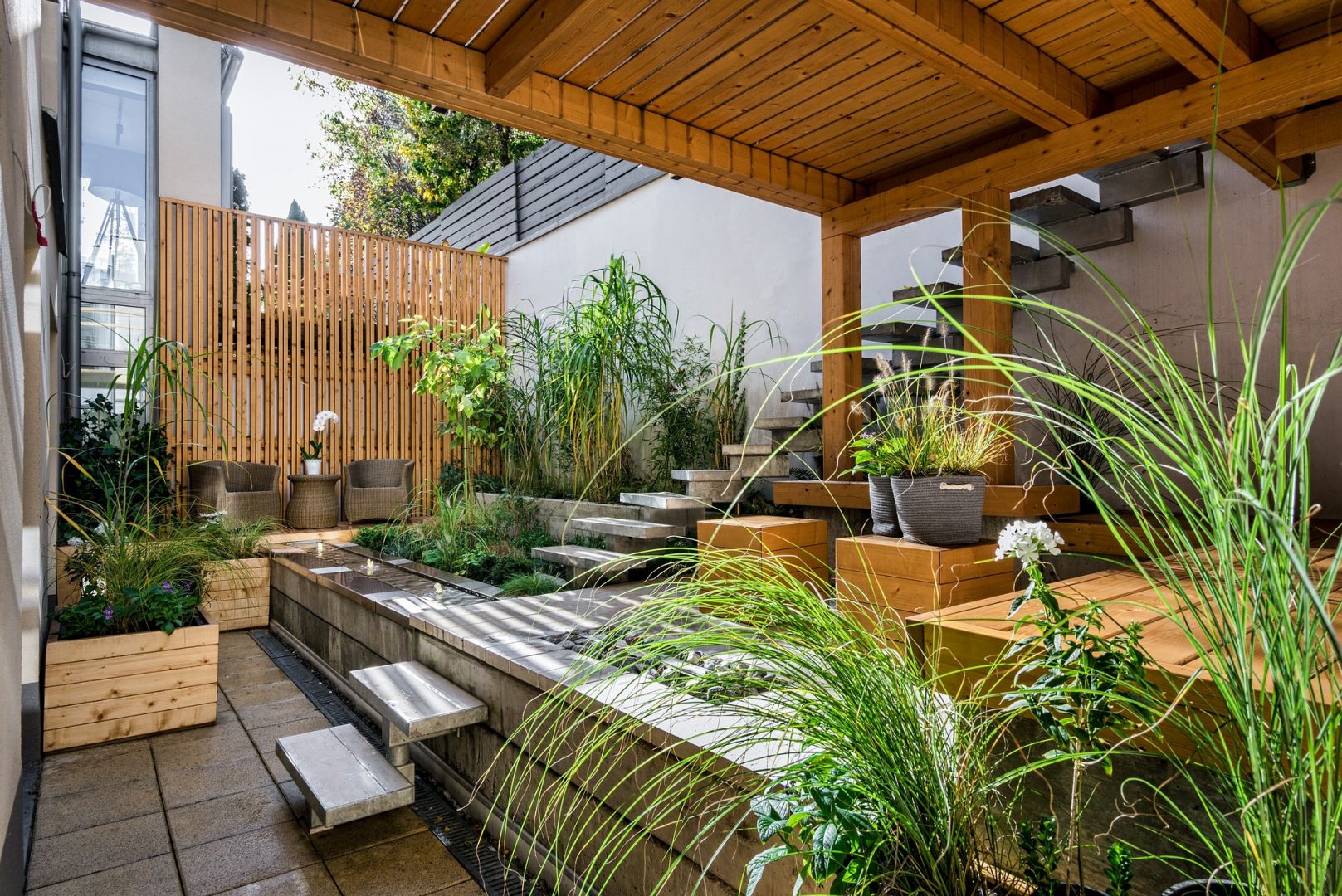
In restricted spaces, targeted screening can preserve more usable garden area than a wide continuous hedge.
Screening for Different Sydney Conditions
Sydney is not one uniform growing environment. Exposure, soil, rainfall, reflected heat and coastal influence can significantly change the performance of the same plant.
Exposure
Coastal Sydney
Salt-laden winds, sandy soils and exposed positions mean plants should be selected for site tolerance as well as privacy.
Heat
Western Sydney
Strong western sun, reflected heat and dry periods make heat tolerance and irrigation strategy particularly important.
Low light
Shaded Urban Sites
Close buildings may already reduce direct light. Increasing hedge density can further affect sunlight and airflow.
Dapple's guide to planting for Sydney weather provides more detail on matching plants to local conditions, while our Sydney horticultural consulting service can help resolve difficult plant-selection requirements.
Australian design guidance: The Australian Government's Your Home landscaping guidance recommends selecting plants suited to local climate, soils and rainfall rather than relying on species that require excessive intervention.
Should You Plant a Screen Directly on the Boundary?
Not automatically.
If the privacy problem is an elevated bedroom window or balcony, a three-metre hedge planted against the rear fence may still sit below the actual line of sight.
Moving the screening plant closer to the area being protected can sometimes interrupt the same sightline using a smaller plant.
Designer thinking
Think in section, not only in plan
Landscape plans show where a plant sits horizontally. Privacy is three-dimensional.
A designer also considers viewer eye level, changes in ground level, deck or balcony height and the eventual canopy or foliage height of the proposed screen.
This becomes particularly important on Sydney's sloping properties. Dapple's sloping-block landscape design guide explains why privacy at different levels should be resolved through sightlines rather than boundary height alone.
Five Screening Mistakes We Try to Avoid
01
Choosing only by growth speed
Fast establishment can become high maintenance once the desired height is reached.
02
Ignoring mature width
A broad species can gradually consume paths, lawn and entertaining areas.
03
Over-screening
Blocking every boundary can remove useful sunlight, airflow and borrowed landscape views.
04
Planting too closely
Instant density can become competition and an increasingly difficult maintenance problem as plants mature.
05
Forgetting maintenance access
A hedge that cannot be safely reached from both sides can become surprisingly difficult and expensive to maintain.
For broader planting and layout issues, see Dapple's guide to common garden design mistakes.
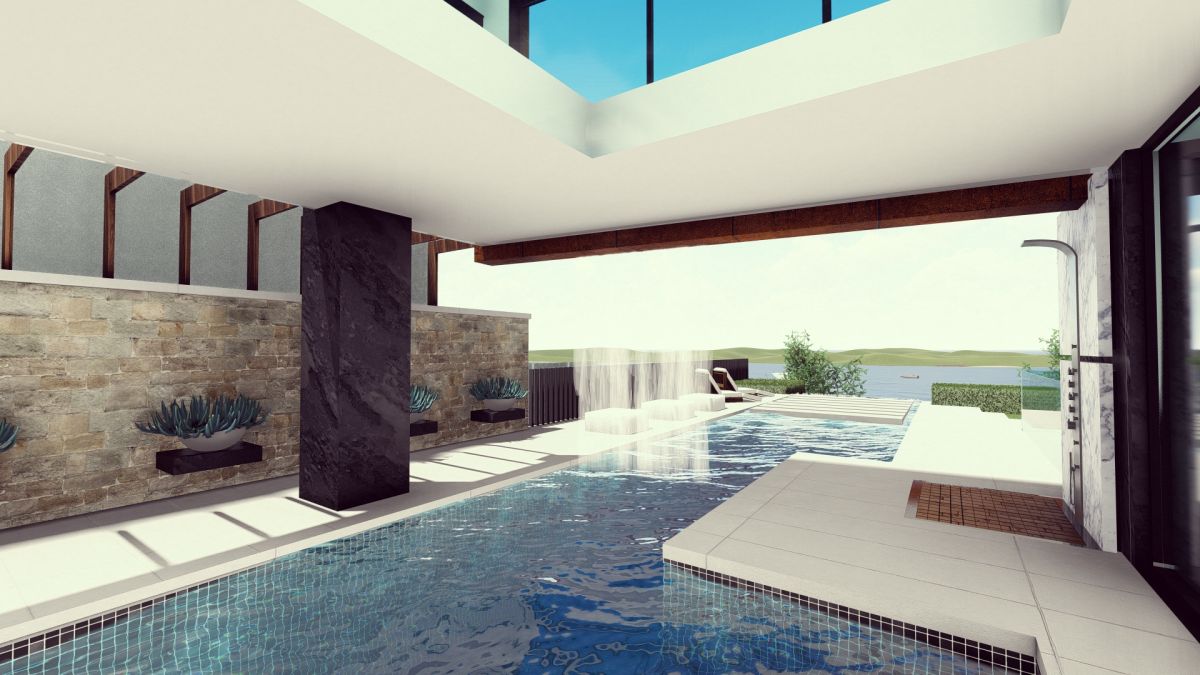
Professional planting design treats screening as part of the complete landscape rather than as a green wall added after the layout is finished.
Frequently Asked Questions
What is the best screening plant for privacy in Sydney?
There is no single best species for every site. Lilly Pilly, Murraya, Viburnum, Photinia and Pittosporum can all provide useful screening, but the right choice depends on required height, available width, sunlight, exposure, soil conditions and maintenance tolerance.
What is the fastest-growing screening plant?
Vigorous plants such as Photinia can establish quickly, but growth rate should not be considered in isolation. Faster growth generally means more pruning once the required screen has formed.
How tall should screening plants be?
Only as tall as necessary to interrupt the unwanted sightline. A strategically positioned smaller tree or screen may provide better privacy than an unnecessarily tall boundary hedge.
Which screening plants work in narrow spaces?
Start with the available planting-bed width and select cultivars whose natural mature dimensions are compatible with that space. In extremely narrow areas, climbers, trellises or targeted structural screening may be more practical than a conventional hedge.
Landscape designer perspective
Good Privacy Planting Should Almost Disappear Into the Design
A successful screen should not feel like a plant selected simply because the neighbours needed to disappear.
It should contribute to the garden's structure, light, scale, seasonal interest and relationship with the architecture.
The aim is not maximum vegetation. It is the minimum intervention required to create comfortable privacy.
Dapple Landscape Design combines spatial planning and horticultural knowledge when developing planting schemes for Sydney properties. Our work considers mature plant dimensions, privacy sightlines, exposure, soil, irrigation, drainage, maintenance and how planting fits within the complete landscape.
Explore Dapple's hedging plant collection, use the Plant Finder, view our completed landscape projects, or learn more about our Sydney garden design services.
Need Privacy Without Sacrificing Your Garden?
Dapple can design a planting and privacy strategy around your property's sightlines, available space, architecture and Sydney growing conditions.
Discuss Your Garden Call 1300 DAPPLE
1300 327 753